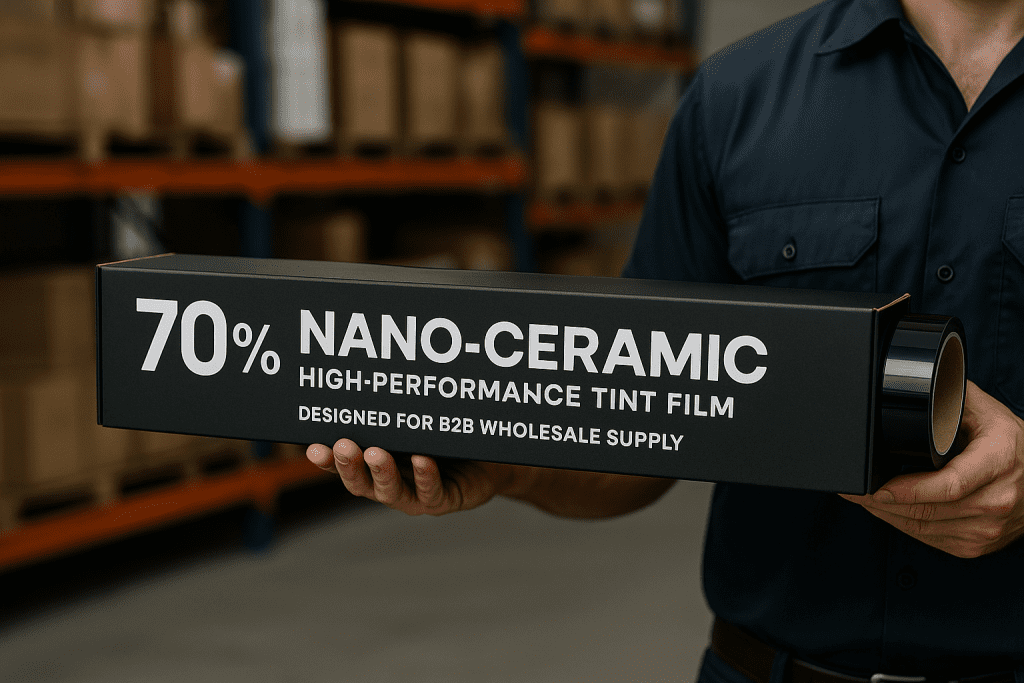

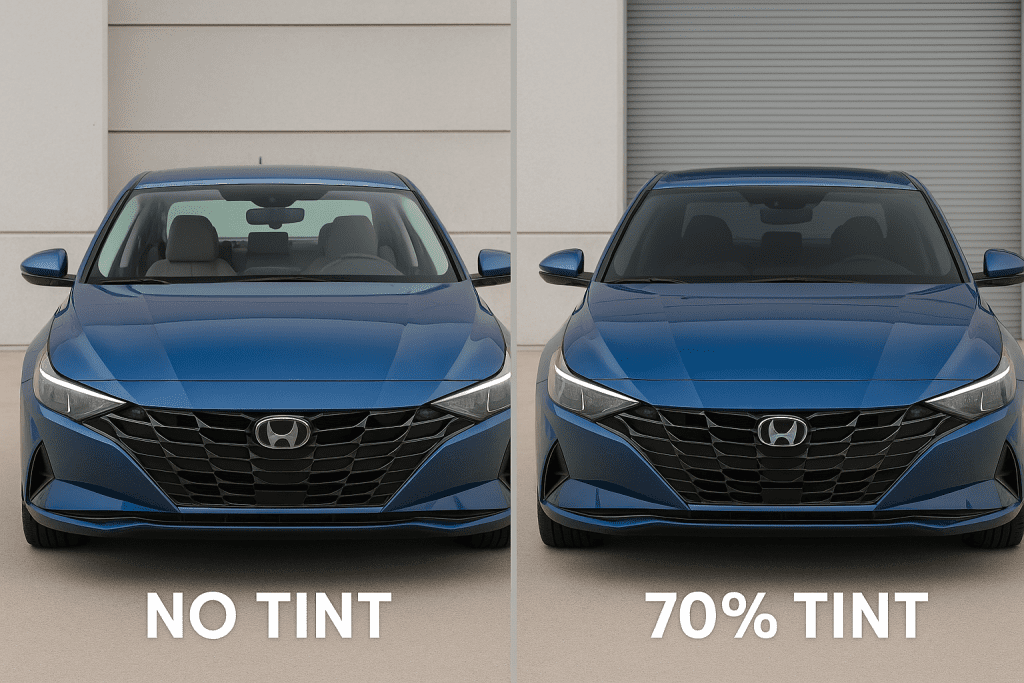
Yes, 70% tint makes a measurable difference. It allows 70% of visible light through while blocking up to 99% of UV rays and 90% of infrared heat. This reduces interior fading, improves driving comfort, and complies with front window laws—making it ideal for performance and legal use.
Executive Summary – Professional Answer Upfront
If you’ve ever wondered whether 70% tint actually makes a difference, here’s the short, professional answer: it absolutely does—but only when you understand what’s happening behind the numbers. A 70% VLT (Visible Light Transmission) automotive window film allows 70% of visible light to pass through the glass, which means it looks almost clear to the eye. Yet, with advanced engineering, especially in nano-ceramic window film, it can simultaneously deliver high IRR (Infrared Rejection), superior TSER (Total Solar Energy Rejection), and up to 99% UV protection, all while maintaining exceptional optical clarity.
Why does that matter to you as a car owner or professional installer? Because 70% VLT films are designed to strike the perfect balance: keeping your vehicle compliant with strict automotive window tint laws, protecting your interior from fading, and improving driving comfort without darkening the glass. When manufactured with precision, a 70% nano-ceramic window film offers measurable differences in heat rejection, noticeable glare reduction, and long-term interior protection, making it an essential option for front windshields and side windows where higher light transmission is required by law.
In other words, 70% tint isn’t “barely there”—it’s a high-performance solution hidden in a light shade. When you choose a professionally engineered film, you’re not just installing a clear layer; you’re adding a UV shield, thermal barrier, and optical enhancement that works every day to protect both you and your vehicle.
Understanding 70% Tint in Automotive Applications
To really understand whether 70% tint makes a difference, you first need to know what that number means in a technical sense. VLT, or Visible Light Transmission, measures the percentage of visible light that passes through your car’s glass after the film is applied. A 70% VLT film allows 70% of light in, making it one of the lightest shades available. But don’t let the clarity fool you—when paired with advanced engineering, it can deliver significant benefits in heat rejection performance, UV protection, and glare reduction without changing the natural look of the glass.
Here’s where it gets interesting: VLT isn’t just about how dark the tint looks. It works hand-in-hand with other critical performance metrics like TSER (Total Solar Energy Rejection) and IRR (Infrared Rejection). TSER measures how well the film blocks the sun’s total energy, while IRR focuses specifically on infrared heat, which is what makes your cabin feel like an oven. A high-quality factory-spec window film with 70% VLT can maintain excellent light transmittance while still filtering out a large portion of infrared energy, meaning you get comfort and protection without sacrificing visibility.
Professional installers and manufacturers often recommend 70% VLT films for front windshields and front side windows because they align with OEM-approved VLT specifications and meet strict automotive window tint laws worldwide. Most carmakers design their vehicles with safety and visibility in mind, and 70% matches those requirements while adding a layer of thermal and UV defense. That’s why it’s the go-to solution in professional installations where legal compliance and driving safety are non-negotiable.
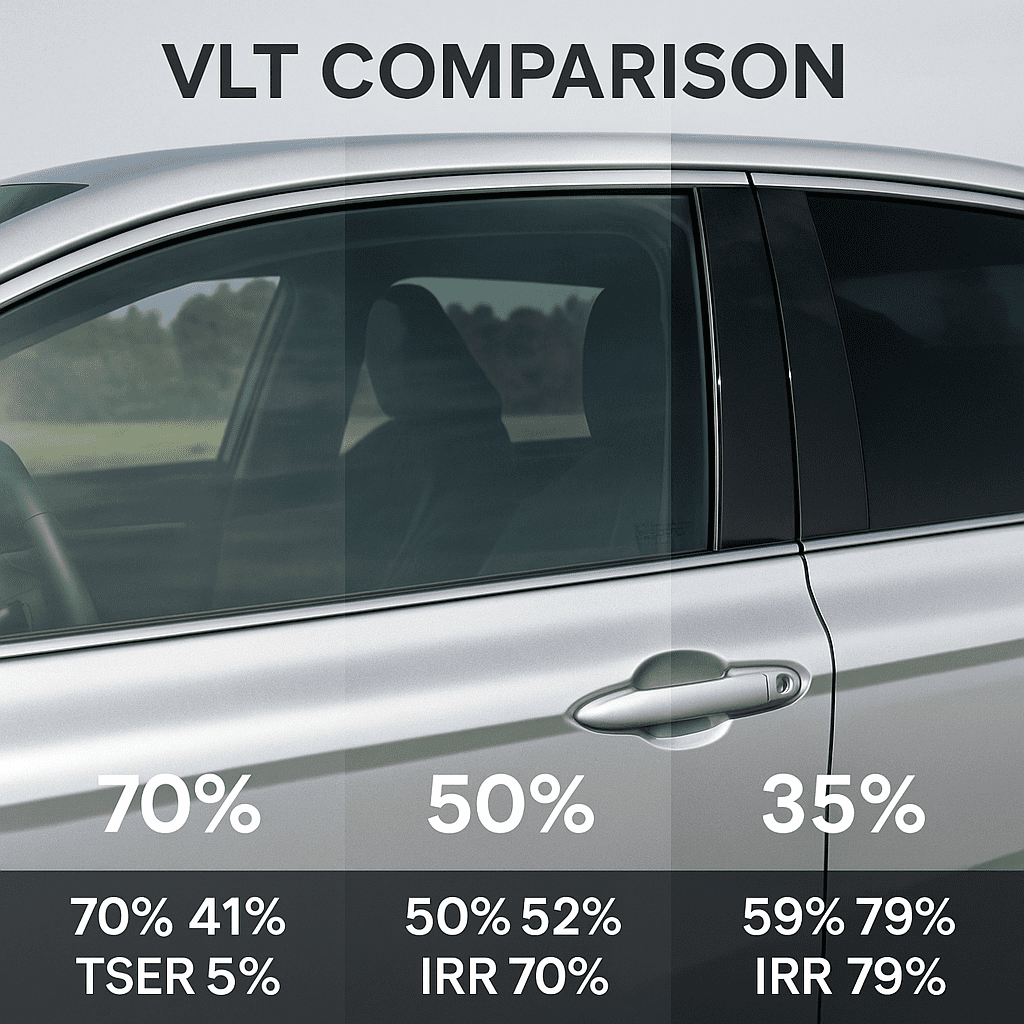
VLT-to-Performance Comparison
| VLT Level | Light Transmittance | Heat Rejection Performance (TSER) | Infrared Rejection (IRR) | Glare Reduction | Common Applications |
|---|---|---|---|---|---|
| 70% | High – factory-clear look | 40–55% (nano-ceramic) | 80–95% | Light glare reduction, ideal for day/night driving | Front windshield tint, OEM-matched front side windows |
| 50% | Medium-high | 50–65% | 85–97% | Moderate glare reduction, slightly darker look | Front side windows, balanced comfort and style |
| 35% | Medium | 55–70% | 90–99% | Strong glare reduction, visible shading | Side windows, aesthetic upgrades, added privacy |
As you can see, 70% tint isn’t about making your car look dark—it’s about delivering OEM-approved performance that combines optical density control, light transmittance, and heat rejection in one subtle, professional package. It’s why high-end detailing shops, modification experts, and factory-authorized installers keep 70% VLT in their toolkit: it’s the perfect intersection of safety, compliance, and comfort.
Step-by-Step: Evaluating Whether 70% Tint Makes a Difference
When you’re deciding if 70% tint is more than just “a clear layer,” it helps to break down the science behind it. A professionally engineered 70% nano-ceramic window film isn’t designed to make your car look dark—it’s built to deliver measurable performance in comfort, protection, and compliance. Let’s walk through the critical areas where a high-quality 70% VLT film makes a noticeable difference.
Step 1 – Heat Rejection & Infrared Performance
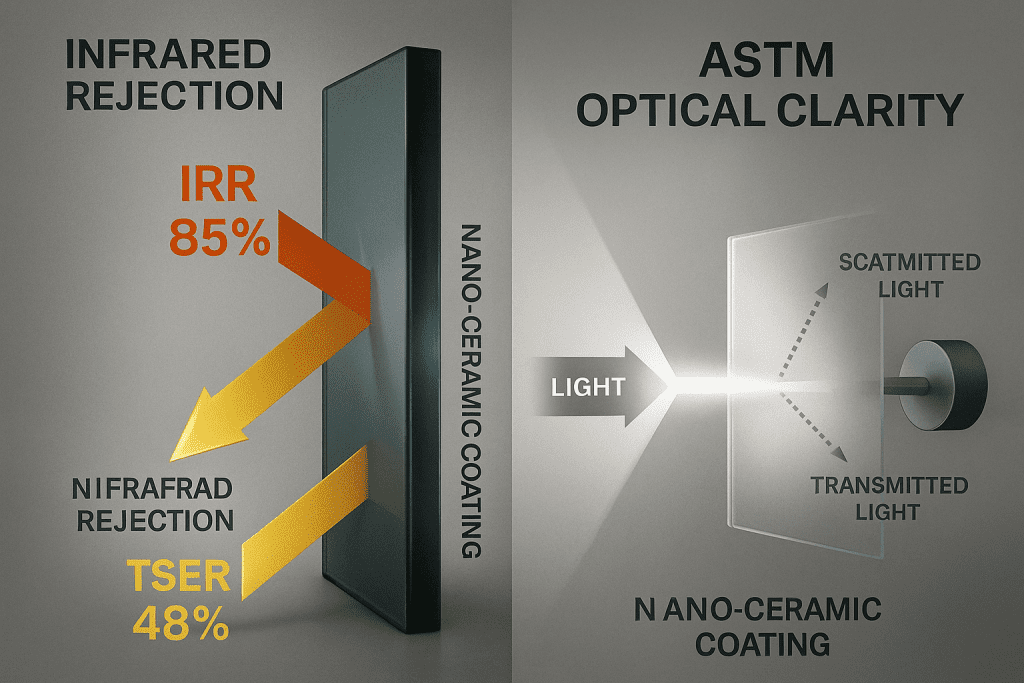
One of the biggest misconceptions is that light tints don’t block heat. In reality, a 70% nano-ceramic coating can achieve IRR (Infrared Rejection) levels as high as 85–95% and TSER (Total Solar Energy Rejection) values above 45–55% when properly engineered. The secret lies in the multi-layer nano-ceramic particles, which are designed to filter near-infrared radiation—the part of the solar spectrum responsible for most cabin heat—without darkening the glass.
What does that mean in real-world terms? Even though the film looks almost factory-clear, your cabin temperature drops significantly under direct sun, making daily driving far more comfortable. For professional installers and detailing shops, these lab-tested IRR and TSER values are key selling points because they prove that performance doesn’t depend on darkness; it depends on material technology.
Step 2 – UV Blocking & Interior Preservation
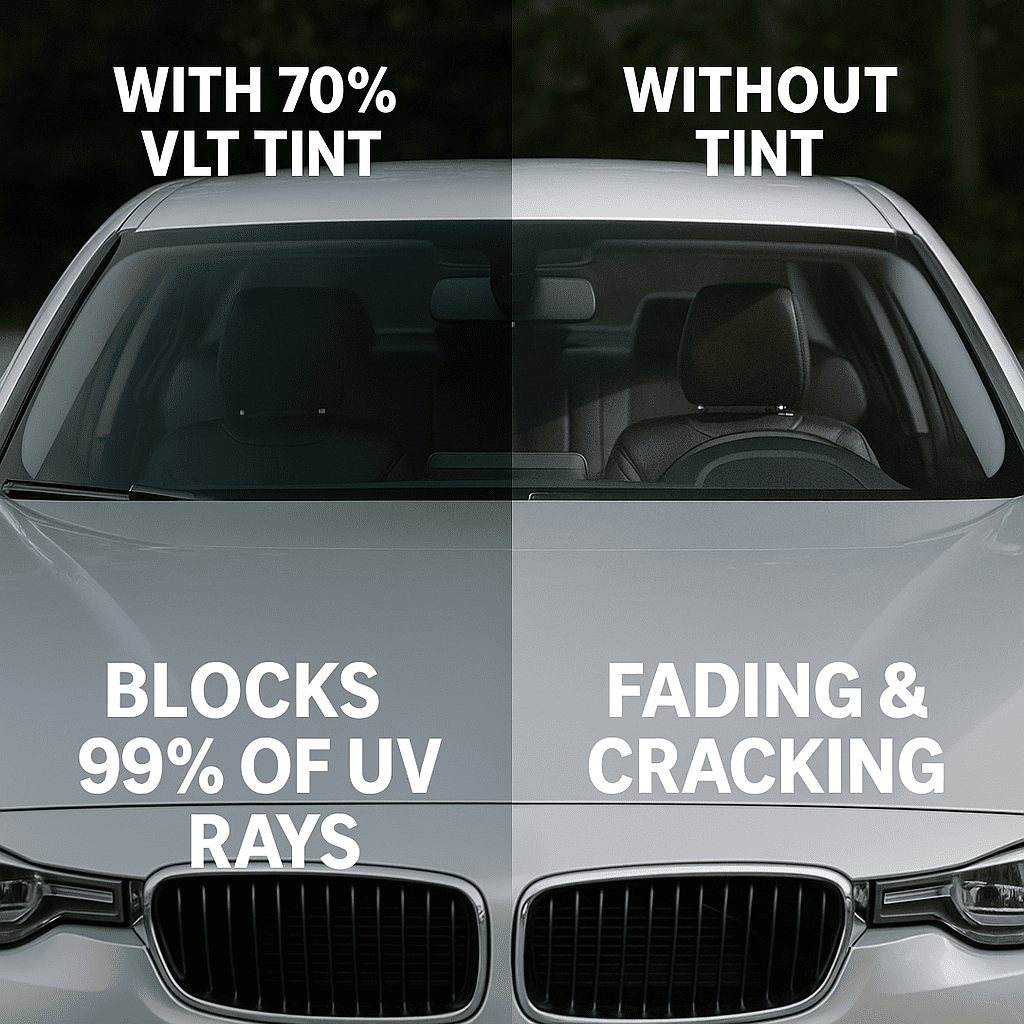
A premium 70% VLT nano-ceramic film blocks up to 99% of harmful UV rays, which does more than protect your skin—it prevents dashboard fading, cracking of leather seats, and discoloration of interior trim. This isn’t just marketing; it’s backed by industry standards like ISO 9050, which measures solar transmittance, and recommendations from the Skin Cancer Foundation on UV exposure in vehicles.
For car owners, this translates to long-term savings and comfort. For B2B buyers, it becomes an easy way to show customers that even a light tint can deliver serious protection without changing the vehicle’s appearance.
Step 3 – Optical Clarity & Driving Safety
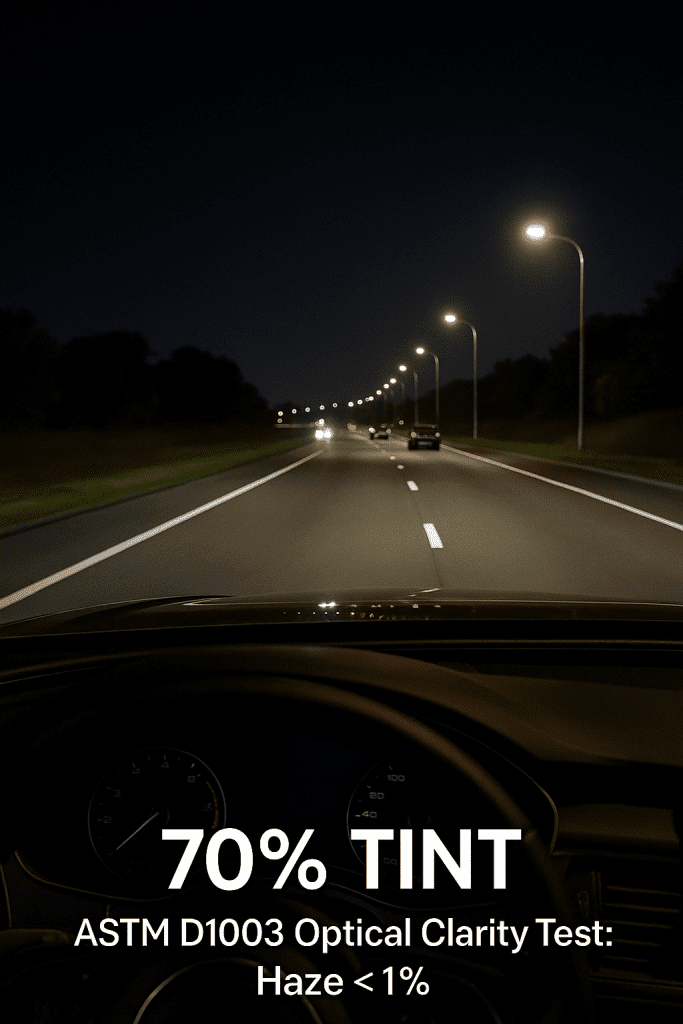
With 70% windshield tint, clarity is everything. High-end films are engineered for low optical haze and zero image distortion, ensuring that visibility remains crystal clear both day and night. The best manufacturers test using the ASTM D1003 optical clarity index, which ensures no “milky” effect or color shift under different lighting conditions.
For night driving, this is a game changer. You get the benefits of heat and UV rejection while maintaining OEM-level transparency, making it safe and comfortable for both drivers and passengers.
Step 4 – Legal Compliance & Global Market Standards
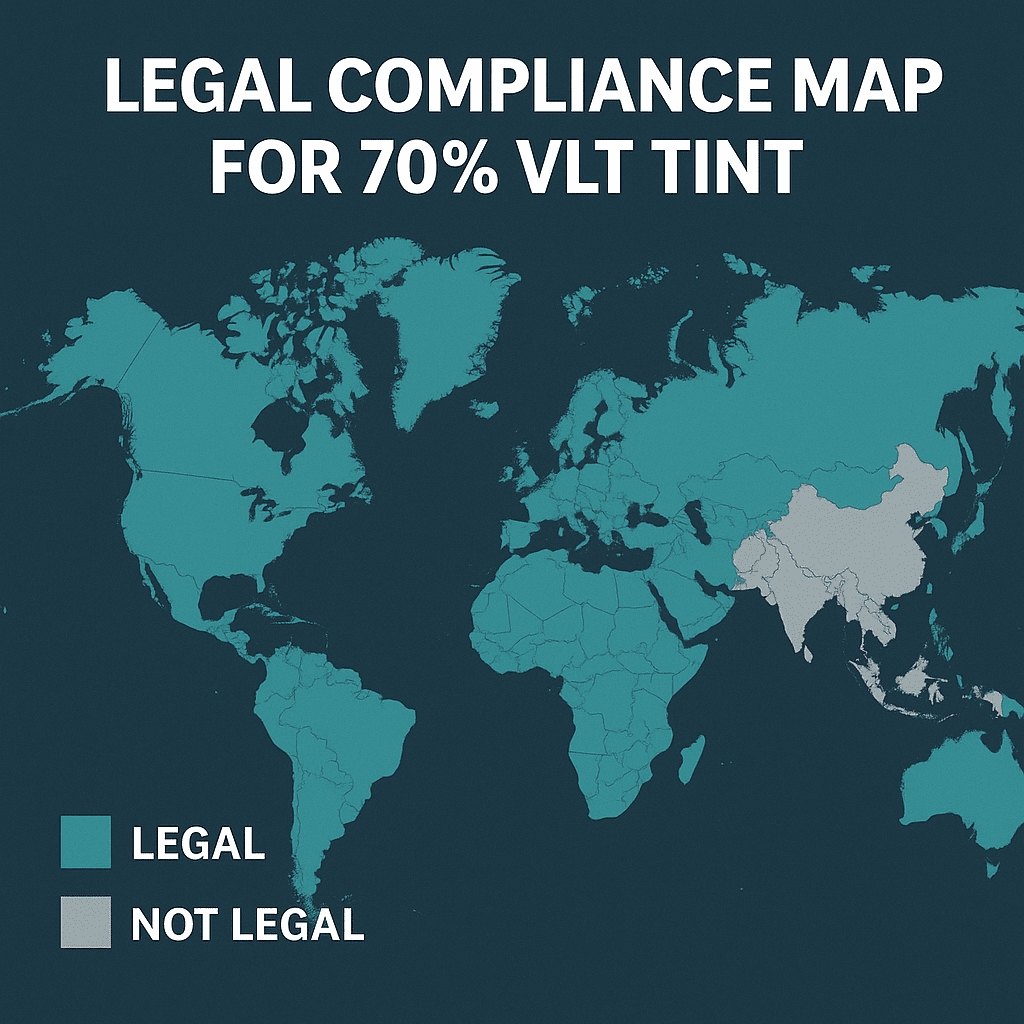
One of the main reasons 70% VLT films are popular is their compliance with strict automotive window tint laws in the U.S., Canada, and the EU. Most regions limit front windshield tinting to 70% or higher, which makes this VLT the perfect solution for installers working within regulatory frameworks.
Professional-grade films are often tested against SAE and FMVSS standards (Federal Motor Vehicle Safety Standards) to ensure they meet optical and safety requirements. For distributors, carrying a compliant 70% tint means you can supply to multiple markets without worrying about regional restrictions.
Step 5 – Professional Installation & Adhesive Technology
A great film is only as good as its installation. High-quality 70% nano-ceramic films use advanced pressure-sensitive adhesive (PSA) and multi-layer coating technology to ensure long-term durability while allowing for easy removal without leaving residue.
Professional installers also know that precision cutting and contamination-free application are critical for maintaining optical performance—any dust or misalignment can compromise the clarity that makes 70% tint so valuable. For B2B clients, this is where offering training and professional-grade adhesive technology becomes a competitive edge.
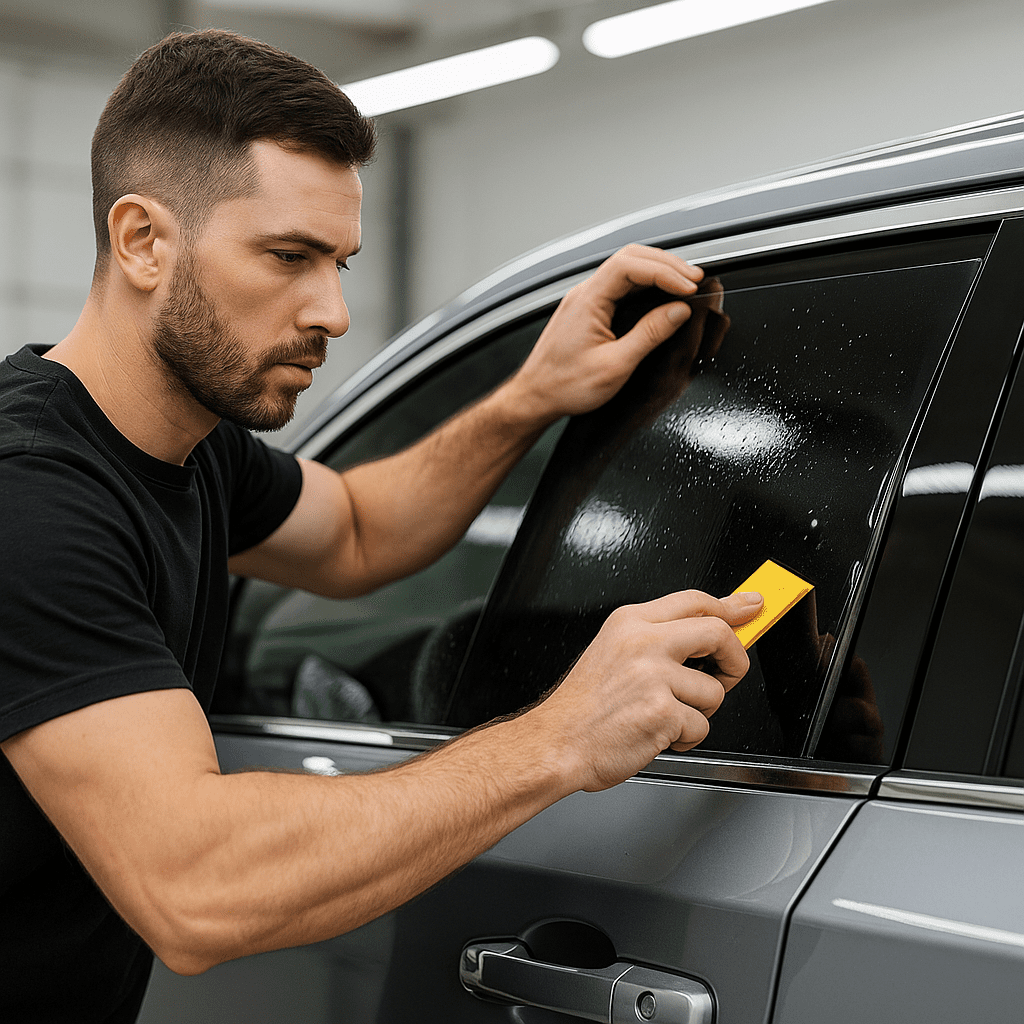
Professional Pros & Cons Analysis for 70% VLT Films
When evaluating 70% VLT automotive window films, it’s important to move beyond the surface and understand the balance between benefits and limitations. This isn’t just about whether the glass looks darker—it’s about how the film performs in thermal insulation, clarity, and compliance under professional installation standards.
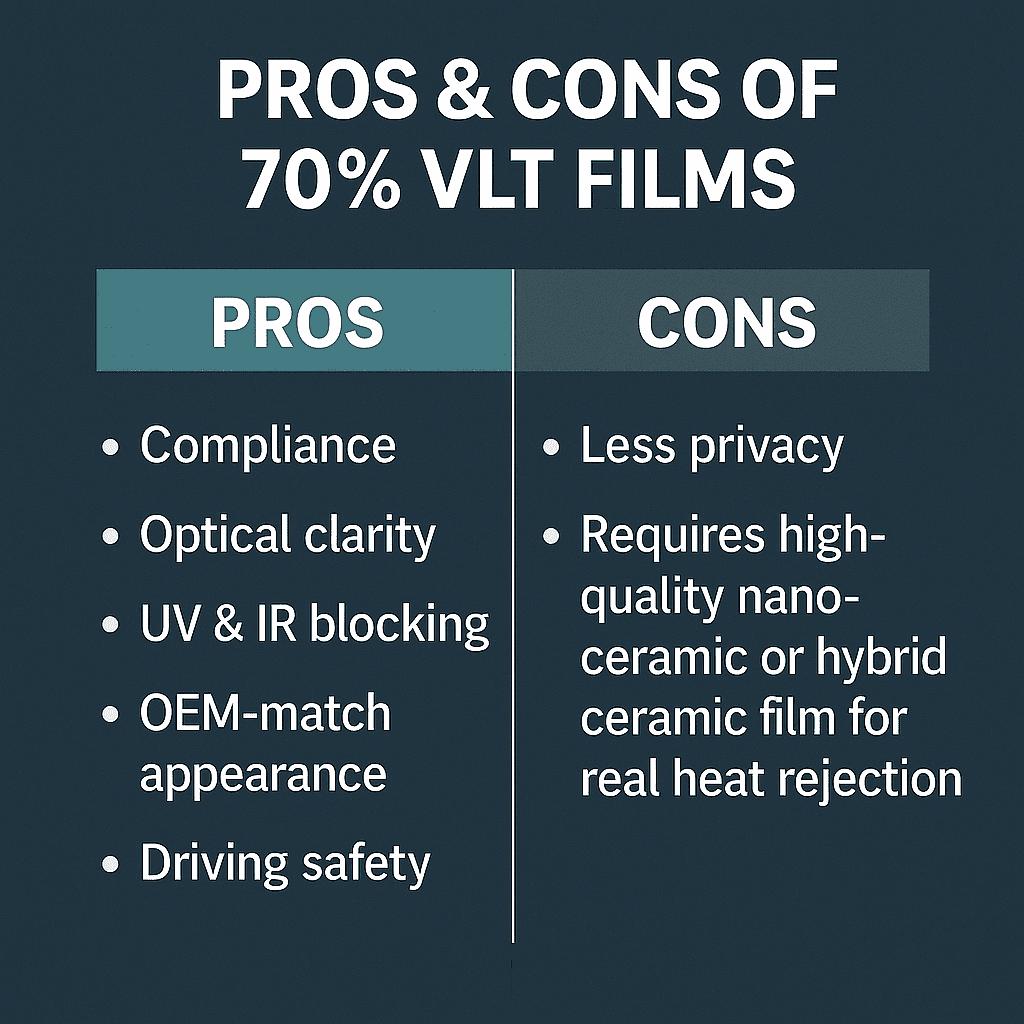
✅ Advantages of 70% VLT Films
1️⃣ Compliance With Global Regulations
One of the strongest advantages of 70% tint is its alignment with strict automotive window tint laws worldwide. For front windshields and side windows, OEM-match tint at 70% VLT ensures vehicles stay road-legal without sacrificing performance. For installers and distributors, this makes it a universal solution for multiple markets.
2️⃣ Exceptional Optical Clarity & Driving Safety
Unlike darker tints, a well-engineered high-performance automotive window film at 70% VLT provides crystal-clear visibility day and night. This clarity supports safe driving, especially in low-light conditions, and is often tested under professional installation standards for optical haze and distortion.
3️⃣ UV & IR Blocking Without Darkness
With premium nano-ceramic or hybrid ceramic film technology, 70% VLT films can block up to 99% UV rays and reject a significant portion of infrared heat. This means you get measurable thermal insulation and interior protection while maintaining a natural, factory-clear look.
4️⃣ OEM-Match Appearance for Factory Integration
For customers who prefer a subtle, original look, 70% tint blends seamlessly with factory glass. It enhances protection without altering the vehicle’s design language, making it a preferred option for high-end cars and professional detailing shops.
⚠️ Limitations of 70% VLT Films
1️⃣ Reduced Privacy Compared to Darker Shades
Because 70% tint is designed for high Visible Light Transmission, it won’t provide the same level of privacy as 35% or 20% films. For clients seeking maximum cabin concealment, additional side or rear window tinting may be necessary.
2️⃣ Performance Relies on Film Quality
Not all 70% tints are created equal. To achieve true heat rejection and thermal insulation, you need a high-quality nano-ceramic or hybrid ceramic film. Dyed or metallic films at 70% VLT typically lack the advanced coating layers required for significant IR blocking and can lead to customer dissatisfaction if sold as “heat control” films.
🔍 The Bottom Line
A professionally engineered 70% VLT film offers a rare balance: legal compliance, optical clarity, and advanced UV/IR protection—all wrapped in an OEM-match tint that keeps the vehicle’s appearance factory-perfect. The key is using high-performance automotive window film technology and adhering to professional installation standards to unlock its full potential. For installers and distributors, positioning 70% VLT as a thermal insulation solution with legal assurance can turn a “light” film into a powerful selling point.
FAQs for B2B Buyers & Installers (People Also Ask Optimization)
When it comes to 70% VLT films, both car owners and professional installers often have similar questions. Below are detailed answers crafted for readers who want technical clarity and real-world guidance.
1️⃣ Does 70% tint reduce heat like darker films?
Surprisingly, yes—when you’re using a professional-grade tint built with advanced nano-ceramic technology. Unlike dyed films, which rely mostly on shading to absorb heat, a high-performance 70% nano-ceramic film uses multi-layer coatings to reflect and block infrared radiation (IR), which is responsible for most of the cabin heat.
While a 35% or 20% VLT may offer slightly higher thermal insulation, a premium 70% film can still achieve impressive IR rejection levels (often 85–95%) without making the glass look dark. This is why many B2B distributors and detailing shops choose 70% as a recommended front windshield application: it keeps the cabin cool while maintaining legal and visual clarity.
2️⃣ Is 70% tint legal for front windshields worldwide?
In most regions, yes—70% VLT aligns with common legal VLT levels for front windshields and front side windows. Countries like the U.S., Canada, and many EU markets set their minimum VLT requirements for windshields between 70–75%, making it the safe, compliant choice for professional installers targeting multiple markets.
That said, laws vary by state and country, so for B2B distributors, carrying 70% as your legal VLT level option ensures you have a universally accepted product while reducing liability for your clients. Always advise checking local regulations before installation.
3️⃣ What’s the difference between 70% nano-ceramic vs dyed tint?
The difference is night and day—literally. A dyed film at 70% primarily provides a visual shading effect, offering minimal IR and UV blocking and often fading over time. In contrast, a 70% nano-ceramic film integrates advanced particles that actively reject heat and block 99% UV rays while maintaining superior clarity.
For professional installers and distributors, the choice between dyed vs nano-ceramic film comes down to performance and long-term customer satisfaction. Nano-ceramic provides consistent thermal insulation and optical quality, making it the standard for professional-grade tint in the high-end market.
4️⃣ Can 70% VLT affect night driving visibility?
When manufactured and installed correctly, no—it actually enhances the experience. A premium 70% film is designed for low optical haze and no distortion, meaning it maintains factory-level clarity under all lighting conditions. For night driving, this is especially important: you get the benefits of UV and IR blocking without sacrificing visibility.
Installers should ensure the product meets professional optical standards and that the application is dust- and bubble-free to avoid scattering light at night. This is another reason why 70% is so popular for front windshield application: it combines safety, comfort, and legal compliance in one package.
Final Professional Recommendation
At the end of the day, the question isn’t just “Does 70% tint make a difference?”—it’s how much of a difference can it make when engineered and installed correctly? A high-quality 70% nano-ceramic film delivers measurable gains in thermal insulation, blocks up to 99% of harmful UV rays, and enhances driving comfort without compromising optical clarity or violating legal limits. It’s the sweet spot where performance, safety, and compliance meet in one professional-grade solution.
For car owners, this means you can enjoy a cooler, more comfortable cabin, protect your interior against fading, and stay within automotive aftermarket regulations without turning your windshield dark. For professionals, the opportunity is even bigger:
✅ For installers and detailers: Offering high-performance tint films at 70% VLT allows you to serve customers who need front windshield compliance while still delivering top-tier heat rejection and UV protection.
✅ For distributors: Stocking 70% VLT as part of your B2B wholesale supply portfolio meets the growing demand for legal, high-tech films in multiple regions. It positions your business as a trusted source for professional-grade PPF & window film, especially for markets with strict VLT regulations.
When you combine distributor solutions, precise installation, and advanced nano-ceramic technology, a 70% film is far from “light tint”—it’s a high-performance automotive window film engineered to protect vehicles, enhance comfort, and drive revenue in the competitive tinting industry.